Fresh Off The Printer
Just roll with it!
Something that I've been wanting to do for a couple of years happened on Tuesday, May 26th 2026: I got someone to demonstrate how to turn your canvas works into a print!
"Okay," you say. "What's a print? Why's it so important to you?"
A print, dear reader, is a condenced copy of your original work that has been scanned into a digital file and printed into smaller, more affordable copies for you to sell!
It's important because it is soooooo much easier to sell prints than original works to people and to get your work seen in more places for people to admire and appreciate!
Think about it.
You've probably see hundreds of copies of Van Gogh's Starry Night:
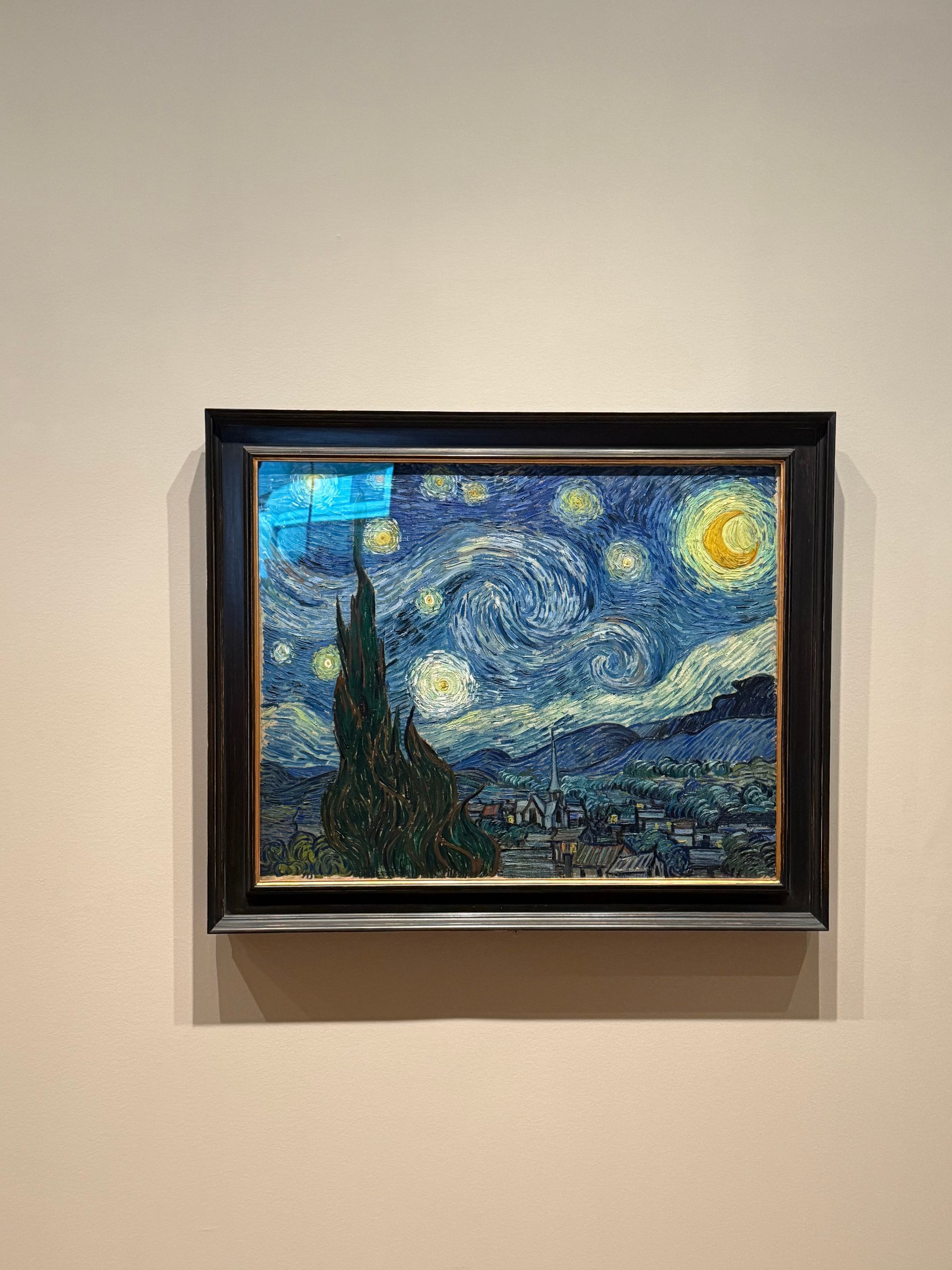
But have you ever travelled all the way to the Museum of Modern Art in the heart of New York City to see it live, in person? (I have. The above picture is the original work that's hung up in the museum. It was a bucket list goal for me that I finally achieved this year). Even if you have, odds of you ever owning this original are nearly impossible. (Please don't go to the MOMA and steal Van Gogh's Starry Night. I would cry.)
What you have probably seen, however, is a copy--or a print--of Starry Night. On canvas bags, on a poster, in a movie or on a magnet, mug, pin, etc.
And that's what a print is supposed to do. Get your artwork out to not only be seen by more people but be more accessible for people to own.
Art is for everyone, not just those who can afford an original canvas piece. And prints are often lower cost and more justifiable to purchase to the average person who has $30 - $40 to spend on a print vs. $300 - $400 to spend on an acrylic/oil/watercolor canvas.
I, myself, own more prints than original works, because it's in my very, very tight budget range!
Prints are also great if people love your artwork but you are hesitant to give up the original piece of artwork! They allow people to still own the art they enjoy while you get to hold on to your work! Honestly, it's a win/win situation.
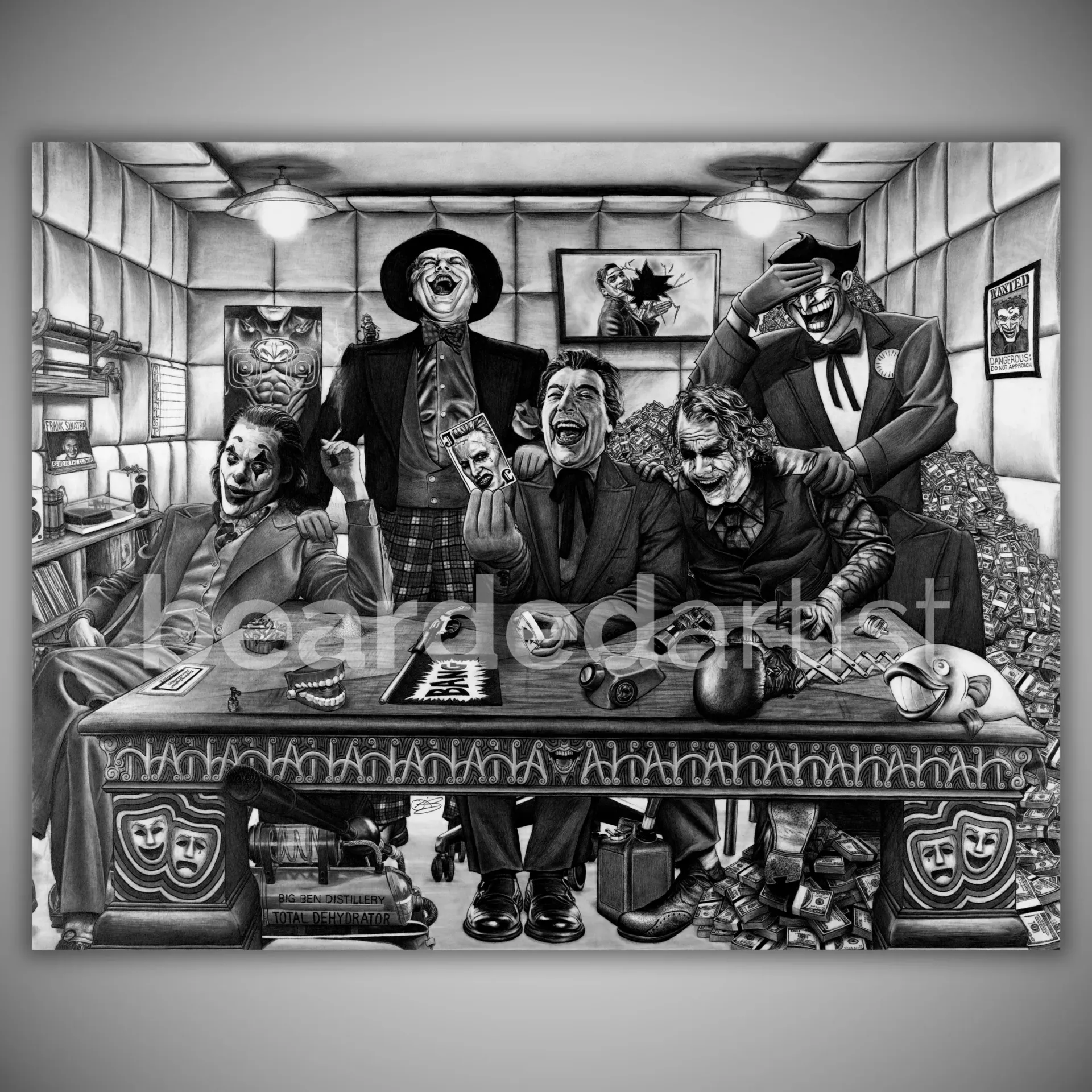
A great example of this is from the artist "The Bearded Artist," who does graphic works about various popular media content. This is his work, "What's So Funny," that originally took him over 250 hours to create.
I don't know about you, but something that took me over a week (10-11 days to be precise) is not something I'd want to give up, no matter how much I charged for it.
So, what did Kevin (the bearded artist's name) do?
He got prints of it made. He goes to various comic conventions (including Motor City Comic Con in Detroit) and sells 11" x 17" posters for $50 each. If you go on his website, you can even get them on wrapped canvas for $250 - $525 if you love it that much. All while he gets to keep the original work that he worked so hard on.
And you know what? People buy it. (My brother bought it, in fact. It's hung up across from his work desk.)
That could be you!
(I mean, not necessarily the selling at a comic con part, but selling prints yes!)
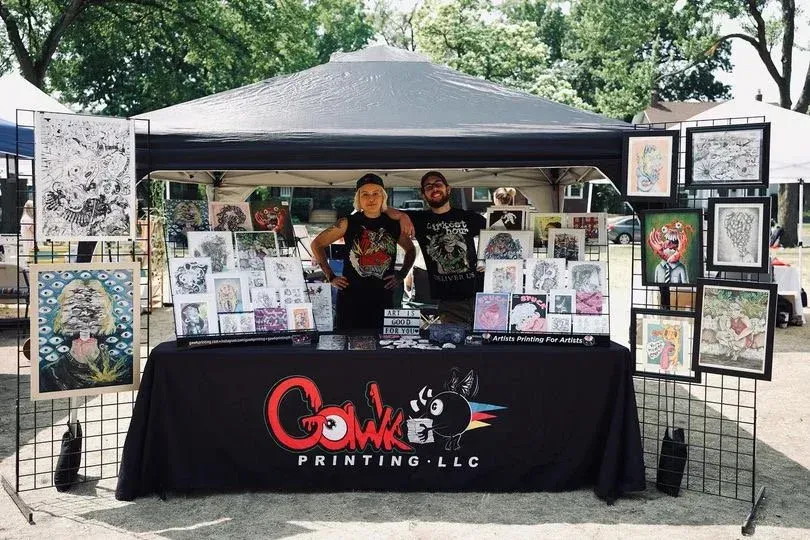
That's why I was so thrilled when Ian Walker from Gawk Printing, LLC. got back to me about his printing business!
He and his partner have been working at their printing company for several years now and specialize in getting prints made for artists just like you!
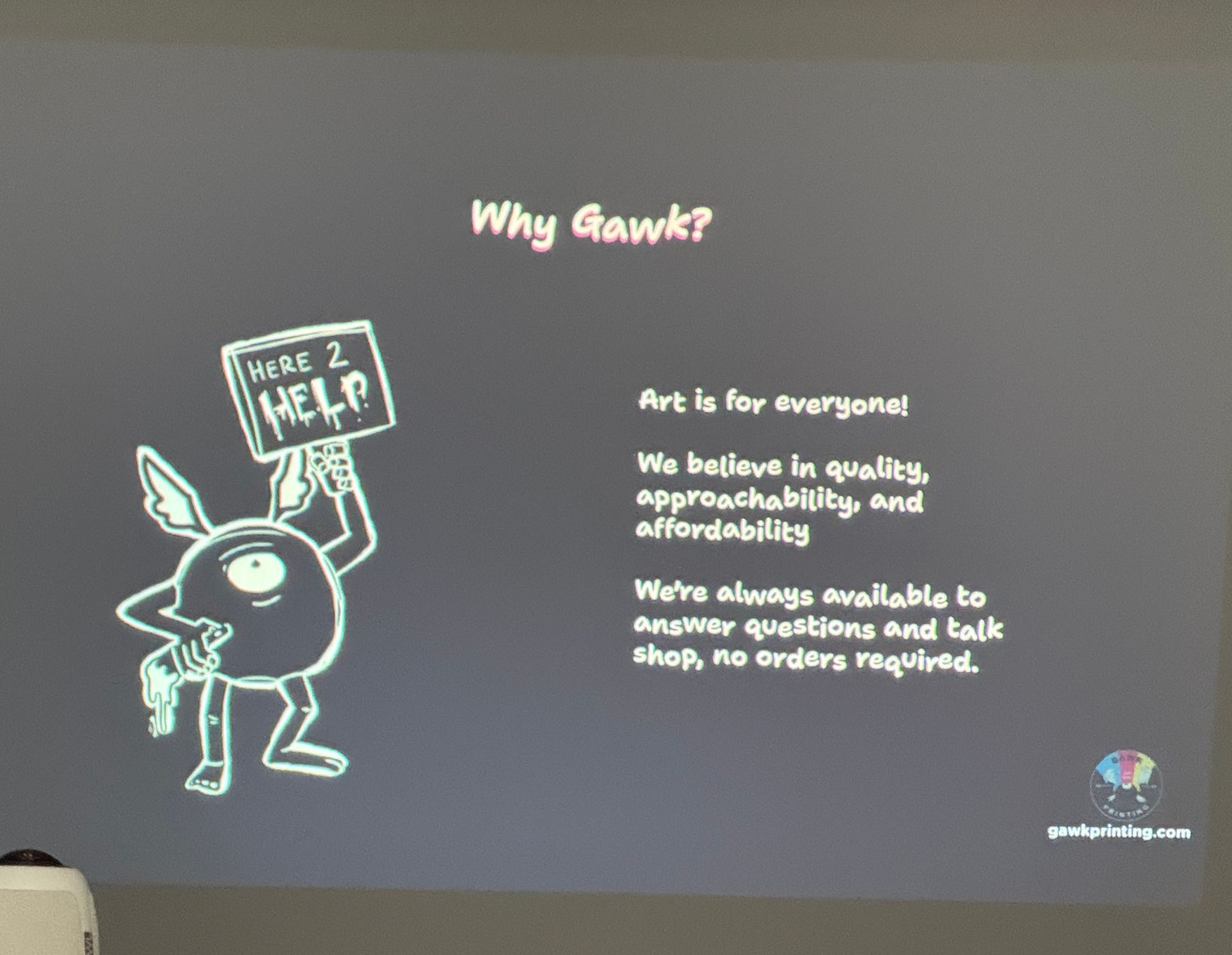
Ian was very open and honest about how the process works too!
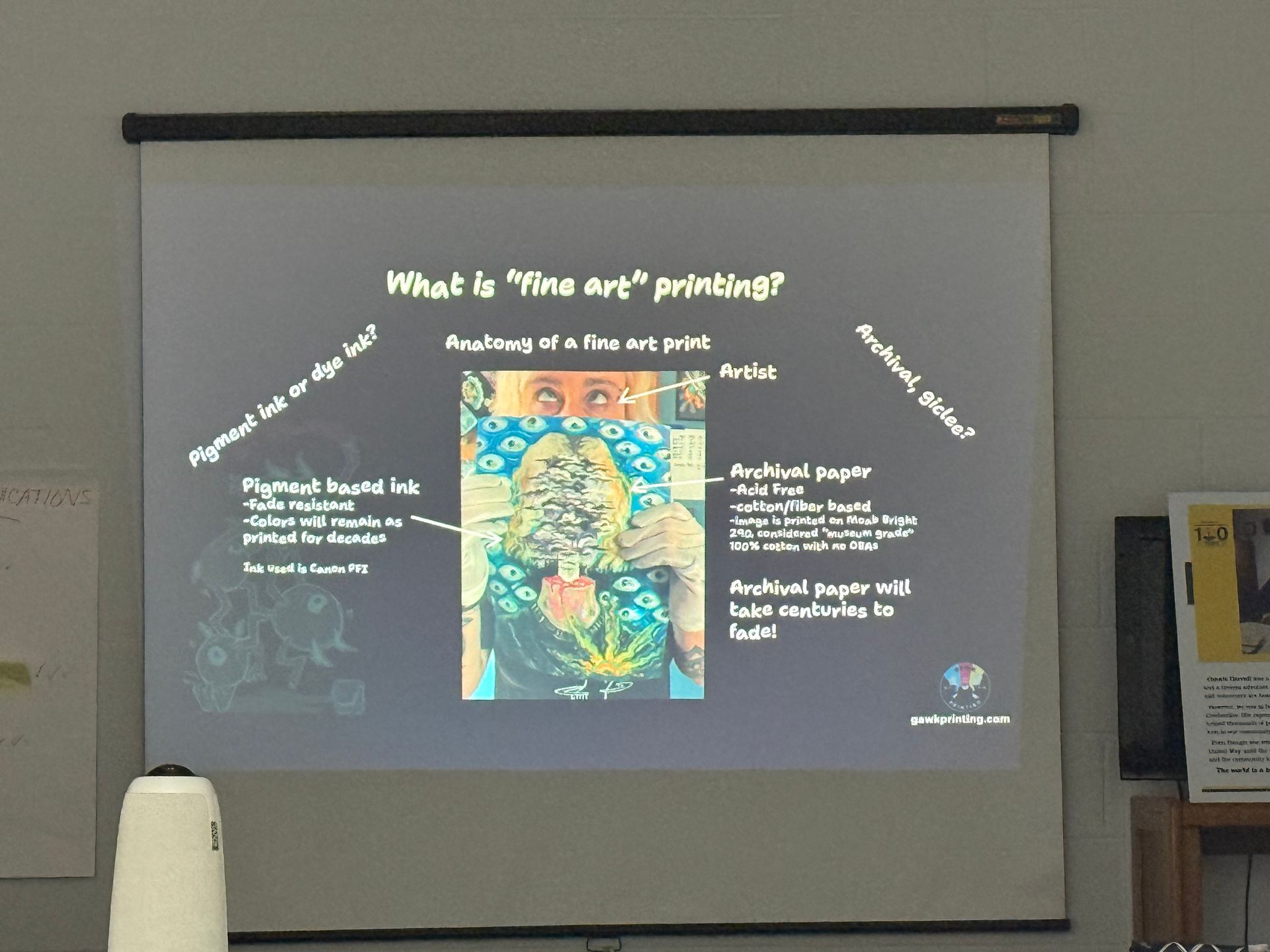
He talked about the different type of printing and paper that can be used to print out your work: for instance, you may hear something like "Fine Art" or "Achival" or "Giclee" style. Those are actually all the same, and they do them all at Gawk!
They also use pigment ink, which lasts longer than dye based ink.
They can also print your work either on paper (from glossy to matte) or on canvas too!
"But Sami," I hear you say. "How do I get my artwork to be printed by them?"
Well, you can always take the iniative and contact them through their website here.
But, Ian gave us the low-down on what you can do to get your work prepped for them to print!
First, you need a good picture of it.
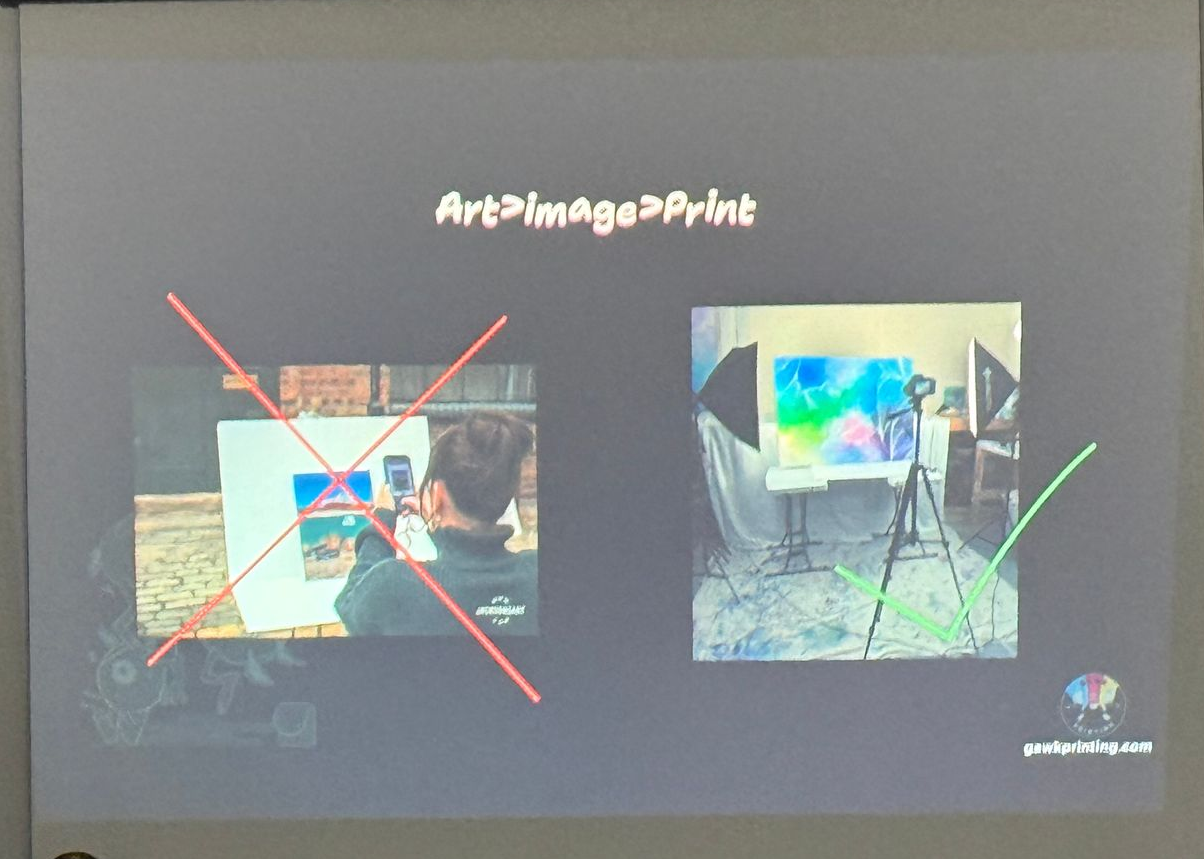
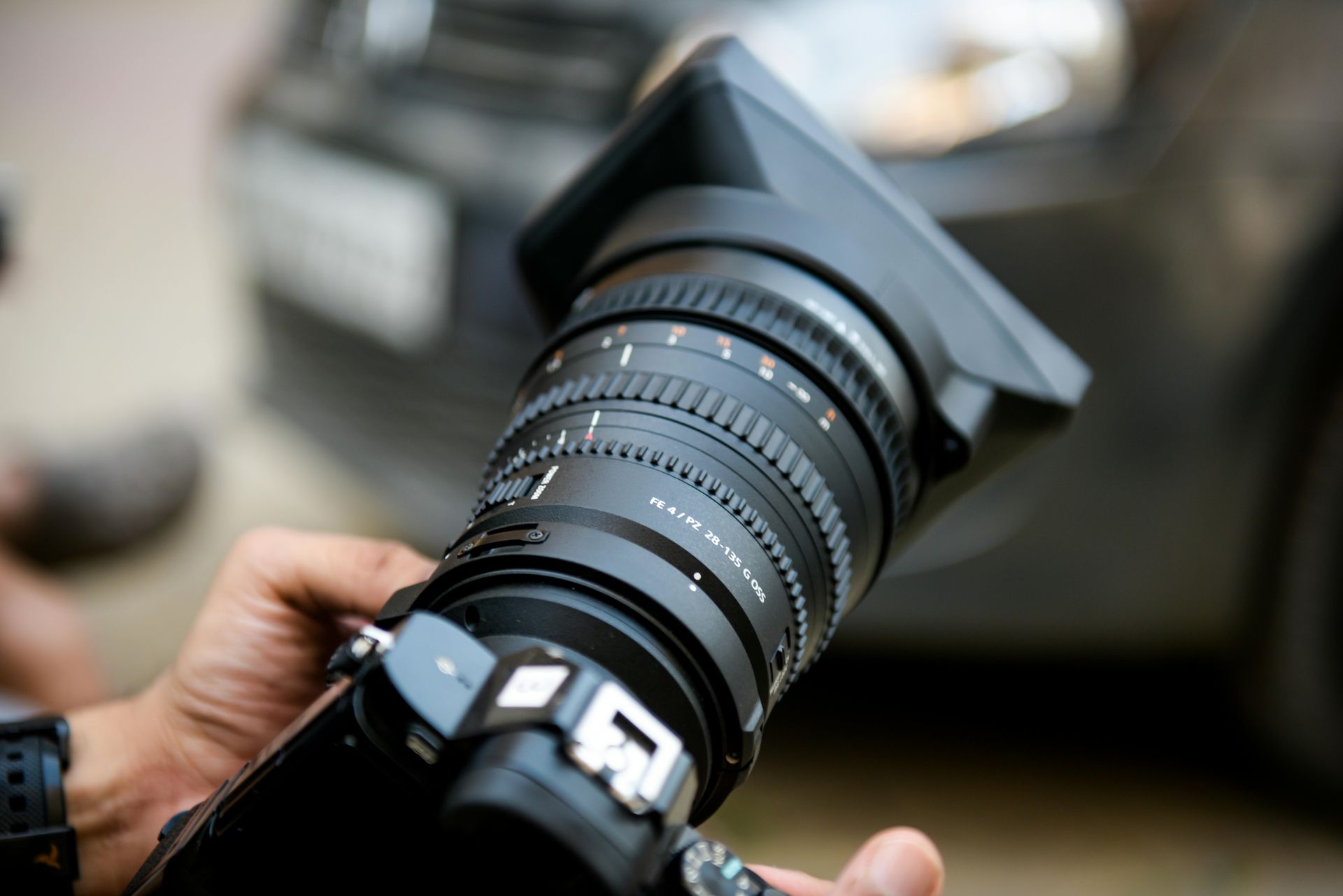
He recommended NOT to use your camera on your phone, as it won't be as good of an image to upload and print. The dimensions will be off, the color might be off, etc.
Instead, you can use a regular digital camera, or maybe ask one of the MAL's many photographers to help you take a picture like the image on the right above! Ian also mentioned that Gawk has just recently started to offer taking pictures of your original artwork as well, so when you contact them, make sure to ask about that!
As for taking the picture with your digital camera, try getting some lights to highlight it correctly. Or, wait until an overcast day and take the pictures outside with natural light and shade.
Once you have the image set and it's come out to your liking, that's when things start getting technical.
I'm here to tell you it's not as scary as it seems! Technology can be easy if you know what to look for and have the confidence to handle it. Remember: nothing worth having comes easy. Stay afraid, but do it anyway.
You'll need to upload the photo you took into your computer after you've decided you like it. You may save it into a PDF (Portable Document Format) or JPEG (Joint Photographic Experts Group) file. These are both okay, but not the most optimal file.
"If you can save it as a .tiff (Tagged Image File Format)" Ian said. "That would work best."
A 300 dpi (Dots Per Inch) .tiff file to be exact.
Here is a good video that can help you achieve just that in the free site of Canva:
If you require further help than this video provides, I suggest calling up Gawk and asking them, doing your own research on the internet, or going to the Ellis Library & Reference Center in the reference department upstairs for some help!
"But Sami," I hear you say. "What if I don't have access to a camera or photography person? Is there anything else I can do?"
You can always use a scanner! "I would check out FedEx or Staples," Ian suggested.
After you've gotten all of these things ready, what's next?
Well, it's time to send that 300 dpi .tiff file over to Gawk and pick out your paper, sizing, and more!
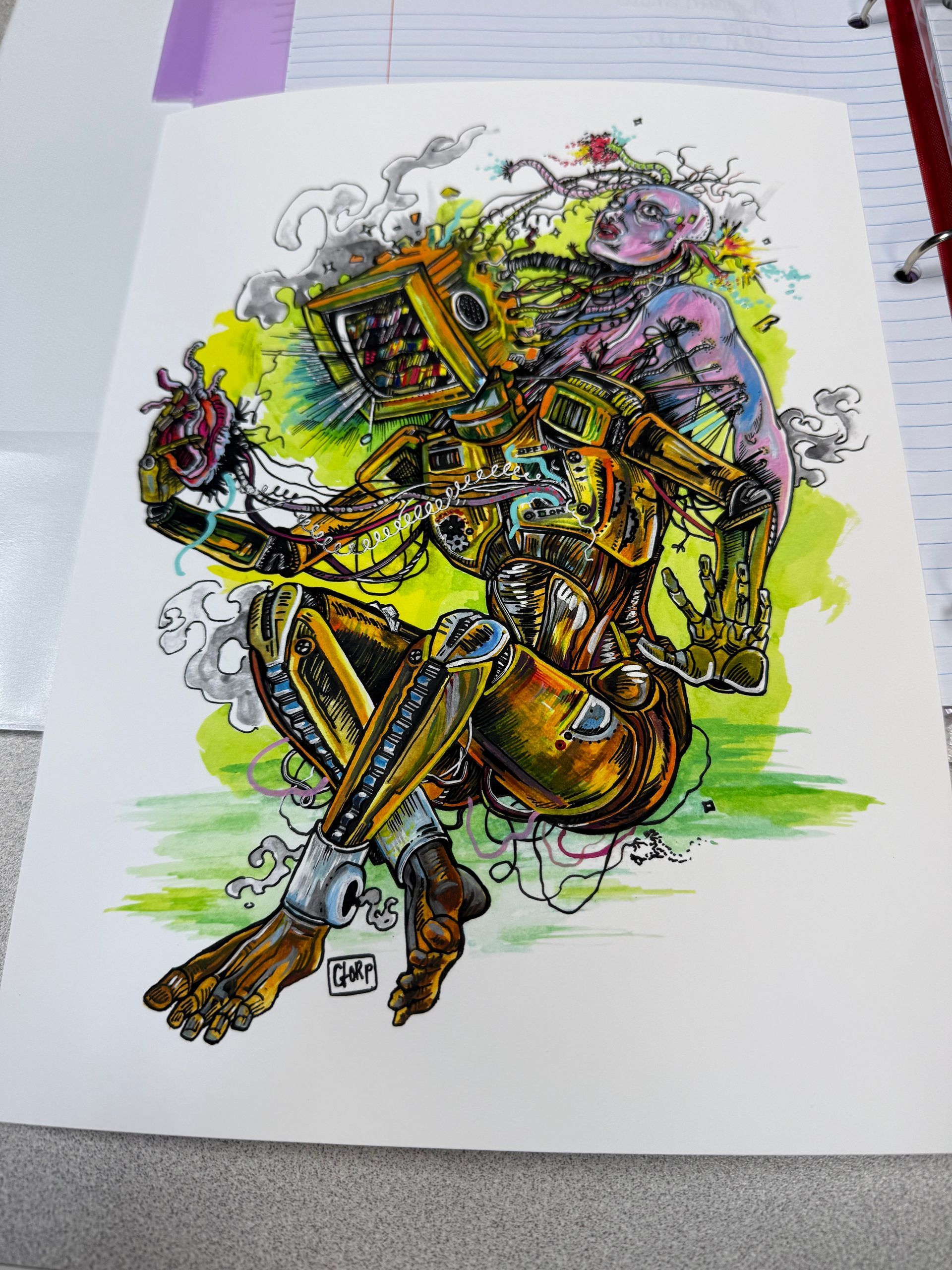
Here is an example of a print of Ian's partner Gloria's. It is, even though it looks like the original work, in fact, a print! A copy of the work that she sells! Printed on their most expensive paper for the highest of quality prints to sell.
"But Sami," I hear you say. And I sigh, because I feel like I'm a preschool teacher again. "What are the different materials and their costs?"
A regular print, at 8 x 10 inches, is $7 a square foot.
A shiney print, on glossy paper, is $9 a square foot.
And something on museum paper, like the above picture, is $16 a square foot.
Price vary upon those, but in all honesty? It's pretty inexpensive when you think about how much you could sell and make off of prints! You can even do them in limited quanities for limited editions of your work, and have the price go up slightly because it's "rare."
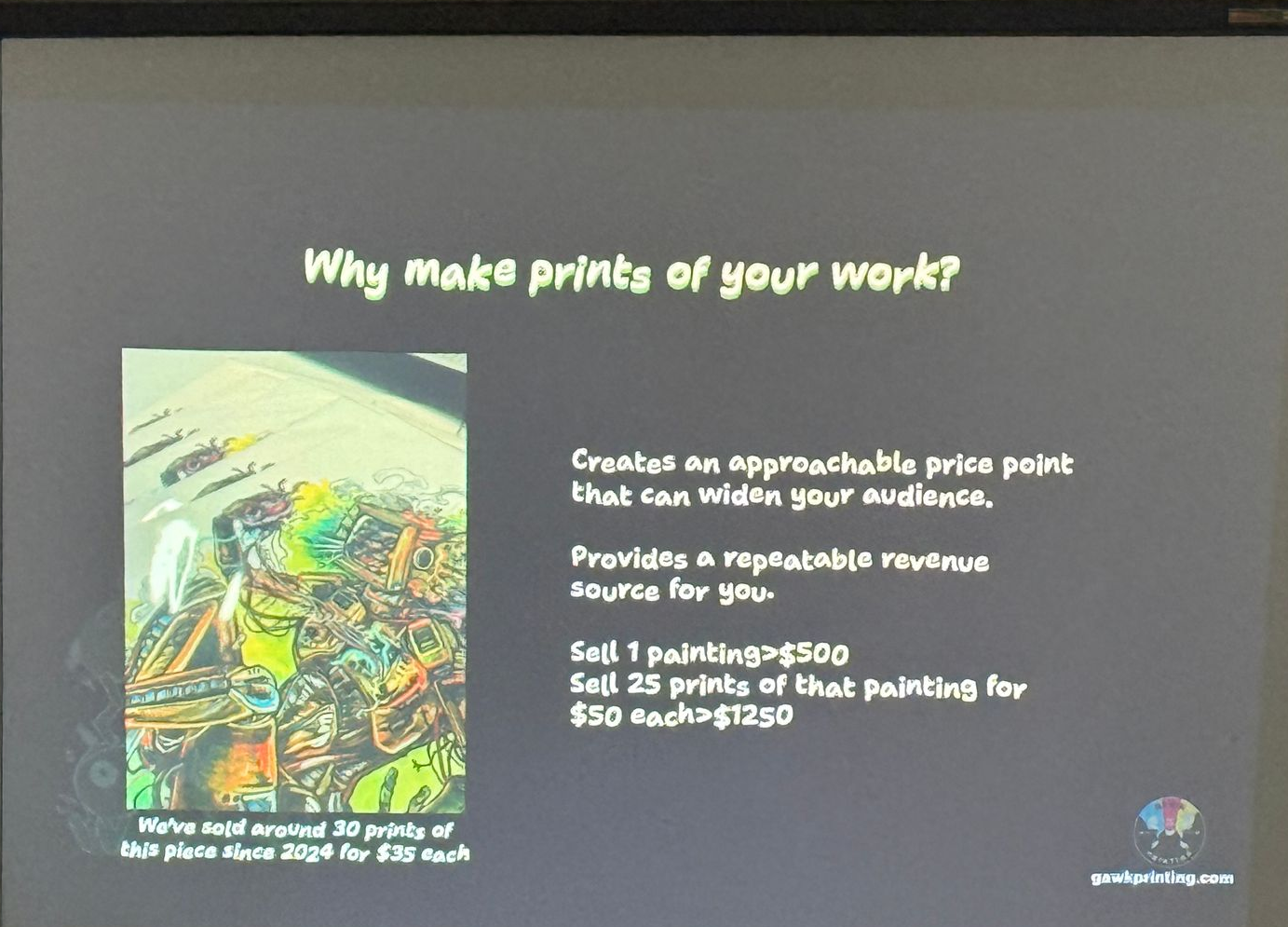
The best part about this kind of investment in your work? It's not going to go bad. If you invest $100 into it, it will stay in quality (as long as you store it correctly: in plastic, in a folder, in a box) for as long as it needs to, until you sell it. And it can always be replicated if it sells super well!
"Okay Sami," I hear you say, finally understanding that you should totally get prints made of your work. "But what is the minimum requirement for me to print?"
That's the beauty of Gawk Printing! The only "minimum" they have is that you have 24 inches worth of imagery to print!
If you have questions about meeting that "minimum," please reach out to Gawk Printing, LLC. and ask them! They're the experts here! I'm just relaying the information I recieved during the demonstration!
Finally, let's say you've got your image of your work. You've got it into the 300 dpi .tiff file. And you've got the "minimum" 24 inches ready. You've submitted and you've paid and now you have to just hurry up and wait.
How long?
"Yeah! How long do I have to wait?" You ask. Boy, do you have a lot of questions today!
"It usually takes us a day or two to print," Ian said. "We cut everything by hand and pack it all by hand too. And we're running this out of our basement studio in our home, outside of our 9 to 5 jobs too."
So, not that long! But patience is a virtue, and it always pays to have patience when you're working with crafters doing fine quality work!
I hope that this post has answered your questions and given you confidence about getting prints of your work made.
Remember: when selling your art at markets, you're going for the money in people's pockets. Not their bank accounts. Art is for everyone, and that means being able to fit things they want into their budgets of every day.
Not every person can afford your $200 - $400 original piece even if it is absolutely worth that amount based on materials, time, and inspiration. But what they can afford is a $25 - $50 print of your work. And they can share it with others too! More people can buy your work and make it more accessible. And I think that should be the ultimate goal of artists: to make art accessible to more people.
In short: it is an investment worth your time, effort, and money.
And I am here, along with Ian and Gloria from Gawk, to help you through it!
Until next time!
--Sami